
Final Preparation and Execution Strategy for a WCAB Trial
A procedural breakdown of hearing-day management, medical evidence authentication, objection strategies, and record creation before the Workers' Compensation Appeals Board.
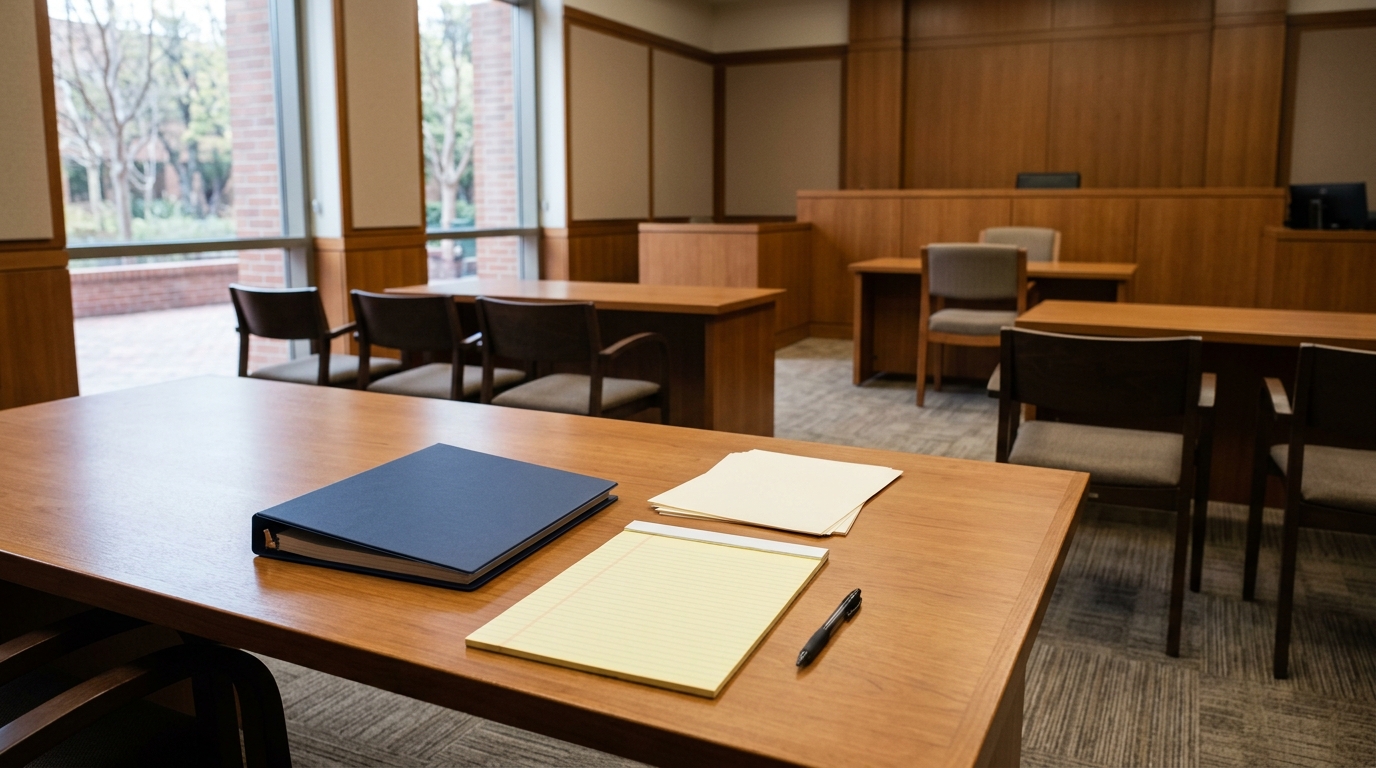
A trial before the California Workers' Compensation Appeals Board (WCAB) represents the culmination of pre-trial discovery, medical evaluation, and dispute resolution efforts. When an issue cannot be resolved at the Mandatory Settlement Conference (MSC), the case proceeds to a formal evidentiary hearing before a Workers' Compensation Judge (WCJ). Under Labor Code Section 5700, the WCAB may hear and determine any matter within its jurisdiction and may do so through a WCJ conducting a formal proceeding where sworn testimony is taken, documentary exhibits are offered into evidence, and a binding factual record is created.
Achieving a favorable outcome requires precise day-of execution. The issues list, stipulations, and exhibit inventory are products of the MSC process—for how those elements are locked in before trial, see mandatory settlement conference guide. The final week before trial and the hearing day itself demand strict procedural compliance with the record as fixed at the MSC. Litigants must navigate statutory rules of evidence, preserve objections, manage witness examinations, and ensure that every element necessary to support or defend a claim is properly made part of the official trial record.
Verifying Hearing Issues and Confirming Stipulations at Trial Call
The boundary of any WCAB trial is strictly defined by the Pre-Trial Conference Statement (PTCS) drafted during the MSC. On the day of the trial, the WCJ will review the framed issues, admitted stipulations, and exhibit list directly from the PTCS. The first task at trial call is to verify that the WCJ's summary of issues precisely matches the unresolved disputes listed on the PTCS—such as injury arising out of and in the course of employment (AOE/COE), temporary disability duration, permanent disability rating, or future medical treatment.
Under Labor Code Section 5502, the MSC is the procedural mechanism through which issues are identified and the case is set for trial. Issues not raised at the MSC are generally not available for the first time at trial absent a showing of good cause or newly discovered evidence that could not have been discovered with reasonable diligence. Raising a new issue at trial without that showing risks waiver and may draw an objection from opposing counsel that the WCJ is likely to sustain.
Stipulations agreed upon by the parties serve as binding judicial admissions. Confirming uncontradicted facts—such as employment dates, average weekly earnings, or benefit payments already rendered—streamlines the proceeding and allows the WCJ to focus exclusively on contested matters. If a stipulation was entered at the MSC but is now disputed, that dispute must be raised immediately at trial call before testimony begins, not mid-examination.
Authenticating Evidence and Handling Objections Under Labor Code Sections 5703 and 5708
Evidentiary rules in California workers' compensation proceedings differ significantly from general civil litigation. Under Labor Code Section 5708, the WCAB is not bound by the common law or statutory rules of evidence and procedure, and the WCJ may conduct inquiries in a manner best calculated to ascertain the substantial rights of the parties and carry out justly the spirit and provisions of the Labor Code.
However, statutory flexibility does not mean an absence of rules. The admissibility of written reports is specifically governed by Labor Code Section 5703, which enumerates categories of evidence the board may receive, including reports of attending or examining physicians, medical-legal evaluators, and employer payroll records. To ensure exhibits are admitted without procedural defect, parties must satisfy baseline authentication requirements when the exhibit binder is formally offered at trial:
- Medical Reports: Must comply with statutory execution requirements, including verification under penalty of perjury and any disclosures required under applicable Labor Code provisions. A report that lacks proper verification is subject to objection on foundation grounds even under the relaxed Section 5708 standard.
- Timely Disclosure and Exhibit Correspondence: Exhibits offered at trial must correspond exactly to the exhibit list marked at the MSC. Attempting to introduce unlisted medical records or late-disclosed reports will trigger objections grounded in Section 5502 and the WCAB Rules of Practice and Procedure. The offering party bears the burden of demonstrating good cause for any deviation.
- Objection Mechanics: Objections regarding foundation, relevance, hearsay weight, or failure to comply with the WCAB Rules of Practice and Procedure must be stated clearly and specifically on the record at the moment the exhibit is offered. A general objection without stated grounds may be insufficient to preserve the issue for reconsideration.
Direct and Cross-Examination Mechanics for Witnesses and Deponents
Witness testimony at a WCAB trial is designed to clarify factual disputes that cannot be resolved through documentary evidence alone. Typical trial witnesses include the injured worker, employer supervisors, eyewitnesses to the industrial incident, or investigators presenting surveillance evidence. The examination must be structured to build or attack the factual record that the WCJ will rely on in the Findings and Award.
Under Labor Code Section 5710, the WCJ or appeals board has the power to issue subpoenas for the attendance of witnesses and the production of records, and depositions taken during discovery may be used at trial for impeachment or as substantive evidence where the witness is unavailable. Counsel and representatives should adhere to the following examination protocols on hearing day:
- Direct Examination: Focus on credibility, mechanism of injury, daily functional limitations, and consistent reporting to medical providers. Direct testimony should complement, not contradict, contemporaneous medical histories documented in the admitted exhibits. Inconsistencies between live testimony and prior medical histories will be exploited on cross-examination and may undermine the weight the WCJ assigns to the witness.
- Cross-Examination: Focus on prior inconsistent statements made in deposition transcripts, medical questionnaires, or personnel records. Frame questions tightly to elicit concise factual admissions rather than narrative explanations. Where a deposition transcript is used to impeach, the specific page and line must be identified on the record so the transcript can be located in the exhibit binder.
- Expert and Vocational Testimony: Physicians and vocational evaluators rarely testify live at WCAB trials; their opinions are typically submitted through written reports admitted under Section 5703. If a medical expert or vocational evaluator is subpoenaed to testify, cross-examination must focus on the factual foundation of their opinion, the adequacy of the history they were provided, and whether their conclusions meet the legal standard of substantial medical evidence.
Making Offers of Proof and Managing Day-of Electronic Testimony
When a WCJ sustains an objection excluding a line of testimony or a proffered document, the offering party must make a formal offer of proof on the record. An offer of proof is a concise statement detailing what the excluded evidence or testimony would have established and why it is relevant to a framed issue. Without a formal offer of proof, the WCAB on reconsideration cannot evaluate whether the exclusion prejudiced the party's case, and the issue may be deemed forfeited.
In current WCAB practice, trials may involve remote appearance technology or virtual witness testimony. Day-of logistics for electronic hearings require advance verification of audio-visual connections, exhibit sharing capability, and witness environment. For procedural requirements regarding virtual appearances and the motion practice required to secure remote testimony, see electronic testimony wcab hearings. During trial, parties must ensure that witnesses testifying remotely are alone in a quiet environment without access to unadmitted notes or unauthorized communication devices, and that the record reflects the witness's physical location at the time of testimony.
Preserving the Record for Post-Trial Decision and Reconsideration
Once the submission of evidence is closed, the WCJ takes the matter under submission. The trial record—consisting of the admitted exhibits, the Minutes of Hearing and Summary of Evidence, and any transcript of proceedings—serves as the sole evidentiary foundation for the judge's formal Findings and Award or Findings and Order. The WCJ must issue a decision accompanied by an Opinion on Decision explaining the factual and legal grounds for the ruling.
Parties must review the Minutes of Hearing and Summary of Evidence prepared by the WCJ promptly after issuance. If the summary inaccurately reflects witness testimony, omits a key exhibit that was offered and admitted, or misstates a stipulation, prompt objection or a request for correction must be filed before the record is closed for reconsideration purposes. Identifying and correcting record errors at this stage is essential: the WCAB on reconsideration reviews the record as it stands, not as a party believes it should have been. For complete analysis of challenging trial decisions through petition for reconsideration, see petition for reconsideration wcab.
Hearing Preparation Checklist for WCAB Trial Day
| Trial Stage | Action Required | Statutory / Legal Basis |
|---|---|---|
| Issue Verification | Compare hearing issues against Pre-Trial Conference Statement (PTCS) at trial call; object immediately to any unauthorized additions. | Labor Code § 5502 |
| Exhibit Submission | Formally offer authenticated medical reports, physician declarations, and vocational exhibits that correspond to the MSC exhibit list. | Labor Code § 5703 |
| Evidentiary Objections | State specific grounds for each objection on the record; address hearsay weight, foundation, and relevance under the relaxed procedural standard. | Labor Code § 5708 |
| Deposition Impeachment | Identify specific page and line of prior deposition testimony used to impeach inconsistent live witness statements. | Labor Code § 5710 |
| Offers of Proof | State a clear, specific offer of proof on the record whenever the WCJ excludes evidence or testimony on a framed issue. | WCAB Rules of Practice and Procedure |
| Record Review | Review Minutes of Hearing and Summary of Evidence promptly; file corrections before the reconsideration period runs. | Labor Code § 5700; WCAB Rules |
Preparing for a WCAB hearing requires systematic attention to statutory requirements, precise exhibit management, and strategic witness examination. Litigants who structure their trial presentation around a clear factual record position themselves effectively both at trial and on subsequent appeal.
This article is provided for informational purposes only and does not constitute legal advice.
Frequently asked questions
What happens if an exhibit was not listed on the Pre-Trial Conference Statement?
Under Labor Code Section 5502, evidence not disclosed at the Mandatory Settlement Conference is generally inadmissible at trial, unless the offering party demonstrates that the evidence was not available or could not have been discovered with reasonable diligence prior to the conference. The party seeking to introduce the unlisted exhibit bears the burden of establishing good cause.
Are formal rules of evidence strictly applied during a WCAB trial?
No. Under Labor Code Section 5708, the WCAB is not bound by the common law or statutory rules of evidence and procedure. The WCJ has broad discretion to receive evidence that helps determine the substantial rights of the parties, provided constitutional due process is maintained. However, Section 5703 still governs the specific categories of written reports that may be received, and objections to foundation or verification remain available.
How do you preserve an issue for appeal if the judge excludes testimony?
If a WCJ excludes witness testimony or documentary evidence, the offering party must make a formal offer of proof on the record. The offer must state specifically what the evidence would have established and why it is relevant to a framed issue. Without this record, the WCAB on reconsideration cannot evaluate whether the exclusion was prejudicial.
Questions about your legal options?
Mission X Trial Lawyers evaluates matters in this practice area. Call (888) 611-4683 or email office@mcxlegal.com.