
What Should I Do If ICE Arrives at My Home or Workplace?
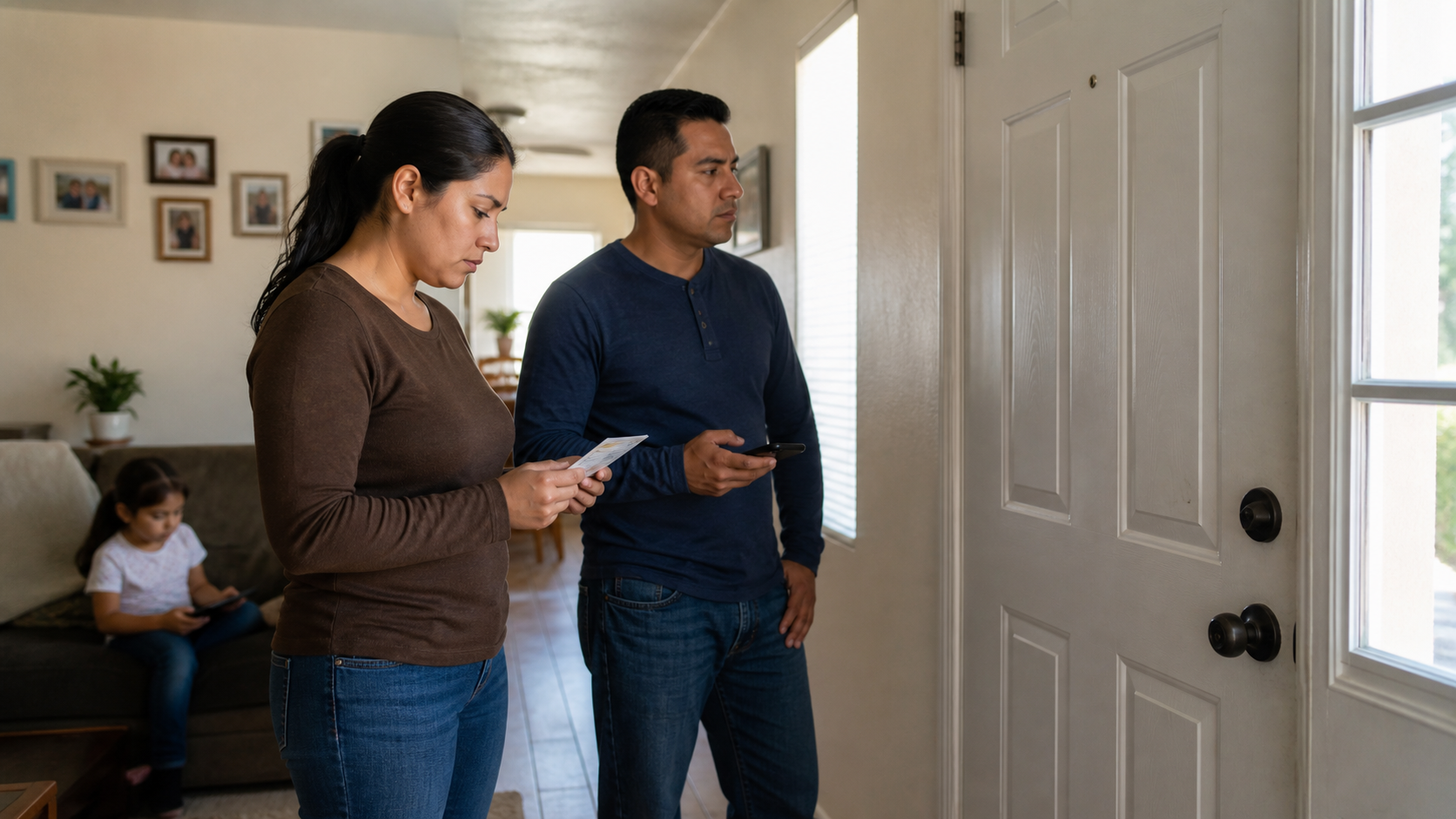
When immigration officers arrive unannounced, the decisions that matter most are made in the first minutes: whether to open the door, what to say, and what to sign. The answers depend on where the encounter happens and what document the officers have. This page sets out the general rules and a practical checklist. It is general information, not a substitute for advice from an attorney about a specific situation.
Identify who is at the door or worksite
Officers may identify themselves as ICE, as "police," or by another agency name, and the agency matters for what they can do. You can speak through a closed door. Ask who they are, which agency they are from, and whether they have a warrant. Ask them to show identification and any warrant through a window, or to slide it under the door.
The ACLU of Northern California's 2018 guide advises speaking through a closed door while asking to see a warrant. Letting officers in is consent; a resident need not open the door simply to speak with them.
Home entry, workplace access, and consent
At home, distinguish an ICE administrative warrant from a warrant issued by a court. An ICE administrative arrest warrant or warrant of removal, signed by an immigration officer rather than a judge, does not by itself authorize entry into a home without consent. A judicial warrant may have different authority depending on its type, who and what it names, and where officers seek to enter. Ask to see the document and check its issuing court, signature, address, named person and scope. The ACLU of Northern California's 2018 card explains the administrative-warrant distinction; a lawyer should assess the particular document and circumstances.
If officers enter without a judicial warrant, the guide's advice is not to resist physically, and to say clearly: "I do not consent to your entry." You may say you want to speak to a lawyer and choose to remain silent. Do not lie, and do not present false documents.
At work, officers can enter areas open to the public, such as a lobby, dining room, or parking lot. Their presence in a public area does not by itself give them access to private work areas. California Government Code section 7285.1 generally bars an employer from voluntarily consenting to immigration agents entering nonpublic work areas without a judicial warrant, except as otherwise required by federal law. A separate section 7285.2 generally bars voluntary access to employee records without a subpoena or judicial warrant, with an exception for I-9 records and documents covered by a Notice of Inspection. These rules concern employer consent; they do not authorize physical resistance or tell a worker to ignore a lawful demand. Do not run or encourage anyone to hide. Workers may decline to answer questions, but no one should be told not to answer.
Information and family contacts to preserve
Before any encounter, make sure a trusted person knows your full name as it appears on immigration documents, your date and country of birth, and your A-number if you have one. Those details are what family members need to find you using ICE's online detainee locator, which searches by A-number and country of birth, or by name, country of birth, and date of birth. Keep a written list of phone numbers, because a phone may be taken.
Parents should arrange in advance who will care for their children. ICE's parental-interests directive (Directive 11064.4, July 2, 2025) says ICE should accommodate a parent's efforts to arrange care for minor children at the time of arrest, absent signs of abuse or neglect. During and after an encounter, write down officers' names and badge numbers, what they said and took, and the time. If it is safe, take photos or video.
How to obtain authorized immigration help
Only certain people may give immigration legal advice. According to USCIS, they are licensed attorneys in good standing with a U.S. state, territory, or D.C. bar, and accredited representatives of DOJ-recognized organizations. Verify an attorney through the state bar, and a representative through the DOJ roster. USCIS warns that "notary publics are not attorneys and cannot represent you." The immigration court's list of pro bono legal service providers names organizations that have committed to free representation at each court.
If someone is detained, act quickly: custody, bond, and transfer decisions can move faster than a family expects. Have the detained person's A-number ready when you call a lawyer.
A practical warrant, consent, and documentation checklist
- Keep the door closed; ask who is there and whether they have a warrant.
- Ask to see the warrant through a window or under the door. Is it signed by a judge, from a court, with your correct address?
- If it is not a judicial warrant, say: "I do not consent to your entry." Do not physically resist.
- Say you wish to remain silent and to speak with a lawyer. Do not lie or show false documents.
- Do not sign anything without a lawyer, especially forms agreeing to leave the country.
- If you fear returning to your home country, say so.
- Write down names, badge numbers, times, and what was taken.
- Give family your A-number and a lawyer's number in advance; keep a written contact list.
Questions about your legal options?
Mission X Trial Lawyers evaluates matters in this practice area. Call (888) 611-4683 or email office@mcxlegal.com.