
Highway 50 Road-Worker Death: Navigating California Death Benefits and Third-Party Claims
A fatal work-zone crash along Highway 50 highlights the complex interplay between California statutory death benefits, public-agency liability, and third-party personal injury litigation.
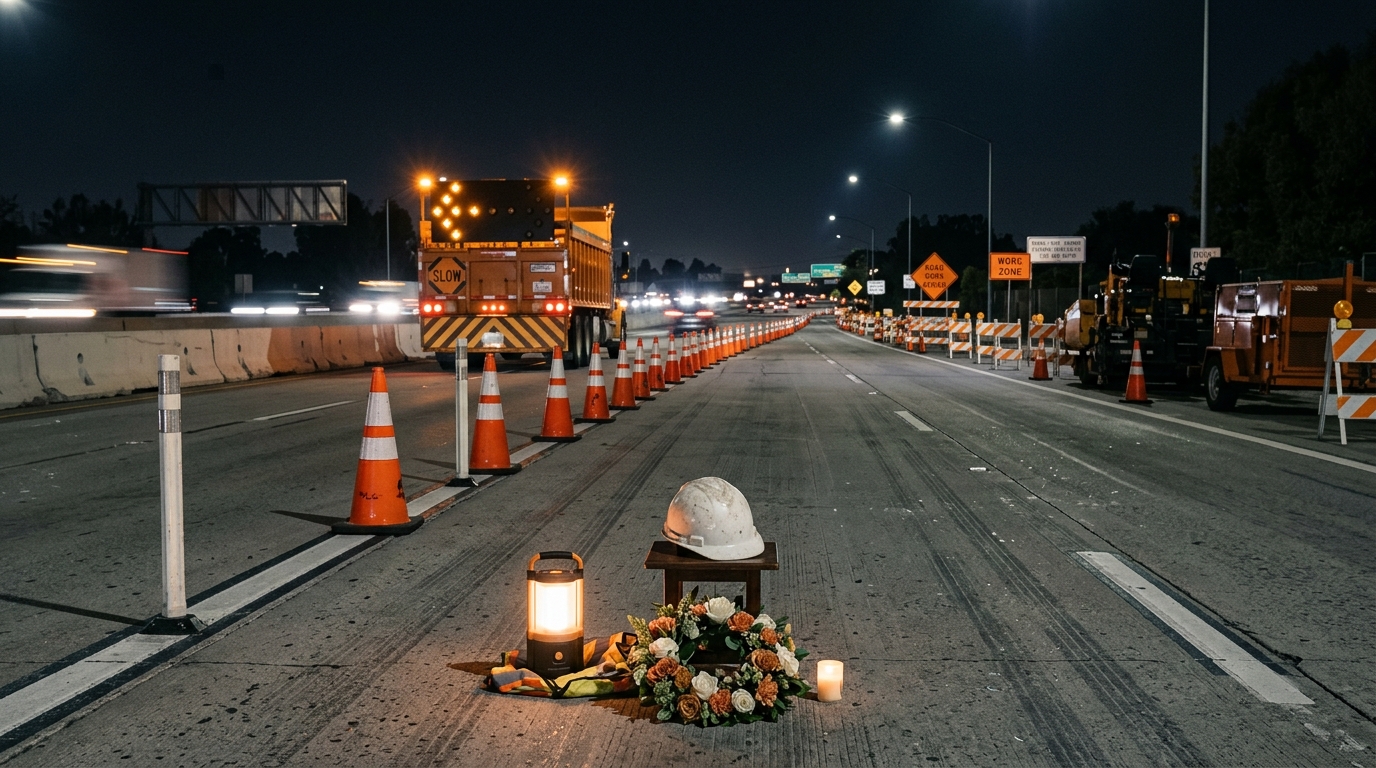
A fatal traffic incident involving a highway maintenance worker on Highway 50 near Stockton Boulevard in Sacramento illustrates the immediate legal questions that arise when a workplace fatality occurs on a public roadway. Roadway construction and maintenance crews work in high-risk environments where motor vehicle traffic, heavy equipment, state infrastructure agencies, and independent subcontractors intersect. When a worker suffers fatal injuries in a work zone, surviving family members face two distinct procedural tracks: statutory no-fault death benefits through the California workers' compensation system and potential third-party civil tort litigation against negligent drivers or non-employer contractors.
Understanding how these two systems interact requires analyzing California Labor Code provisions governing dependent benefits, evaluating state government immunity rules versus private contractor liability, preserving technical physical evidence, and managing carrier subrogation liens. Each track operates under distinct statutory timelines, burdens of proof, and recovery limits, making the sequencing of actions critical for surviving dependents. The dual-track structure is introduced here; third-party liability analysis is developed further at third party liability, and exclusive-remedy questions involving coworkers are addressed at exclusive remedy coworker injury.
Anatomy of a Highway Work-Zone Fatality: The Dual-Track Framework
When a road worker is struck and killed on a state highway, the immediate legal categorization depends on the worker's employment relationship and the entity that caused the fatal injury. Under California law, an injured employee's exclusive remedy against their direct employer for an on-the-job fatal injury is statutory workers' compensation. However, work-zone incidents frequently involve external causes—impaired or distracted civilian motorists, defective traffic control equipment supplied by third-party vendors, or negligent safety practices by unattached subcontractors.
This dynamic creates a dual-track framework. First, the worker's surviving dependents may pursue statutory death benefits administered through the California Division of Workers' Compensation (DWC). This system does not require proof of employer negligence, but recovery is governed strictly by statutory formulas. Second, if a party other than the direct employer contributed to the fatal crash, the family may file a civil wrongful death action under Labor Code Section 3852, which preserves the right to pursue third-party tortfeasors while workers' compensation benefits are being paid.
Labor Code Death Benefits and Proving Dependency (LC §§ 4700–4703)
California workers' compensation death benefits provide financial support to individuals who were financially dependent on the deceased worker at the time of the fatal injury. Under Labor Code Section 4700, the death of an injured employee terminates liability for future disability payments, but accrued and unpaid compensation owed prior to death remains payable to the employee's dependents or estate.
Burial expenses are reimbursed pursuant to Labor Code Section 4701 up to statutory caps determined by the date of injury. The $10,000 burial expense cap cited in the draft applies to injuries occurring on or after January 1, 2013; families should confirm the applicable cap with counsel based on the specific injury date, as the Legislature has amended these figures over time and the current statutory text controls.
Total indemnity amounts for dependents are governed by Labor Code Section 4702, which fixes total death benefit amounts based on the date of injury and the number and degree of dependents. Benefits are paid in installments at the maximum temporary total disability rate in effect on the date of injury. Because Section 4702 benefit tiers have been amended at various injury-date thresholds, the controlling figures are those in the statute as it read on the date of the fatal incident—not a generalized current figure.
Establishing entitlement to these statutory payouts requires proving total or partial dependency status under Labor Code Section 4703. Minor children and certain other statutory categories are generally presumed to be total dependents. Spouses and other household members must provide documented evidence of actual financial reliance—such as joint bank statements, tax returns, and household expense records—existing at the time of the fatal injury. Partial dependents receive a proportional share of the statutory maximum based on the degree of their financial reliance on the decedent.
Preserving Critical Evidence: Cal/OSHA Reports, CHP Reconstruction, and Site Data
Proving liability in civil court while simultaneously supporting a workers' compensation dependency petition requires immediate evidence preservation. Work-zone crashes trigger investigations by multiple public agencies, including Cal/OSHA (the Division of Occupational Safety and Health) and the California Highway Patrol (CHP). These records are time-sensitive: agency retention schedules vary, and physical scene evidence degrades rapidly.
Key evidence streams that must be secured promptly include:
- CHP Multidisciplinary Accident Investigation Team (MAIT) Reports: Detailed physical collision reconstructions, skid mark analysis, speed calculations, and vehicle event data recorder (EDR) downloads.
- Cal/OSHA Inspection Records: Citation history, safety compliance evaluations, job hazard analyses (JHAs), and witness interviews conducted by state safety inspectors following a fatality investigation.
- Caltrans or Local Entity Traffic Management Plans: Encroachment permits, temporary traffic control (TTC) plans, taper lengths, and lane closure logs that establish whether the work zone met applicable safety standards.
- Dashcam and Commercial Telematics Data: Video footage from surrounding vehicles, contractor trucks, or highway monitoring cameras, which may be overwritten on short retention cycles.
Distinguishing Government Agency Liability from Private Contractor Liability
This distinction is one of the most consequential sequencing decisions in a highway fatality case, and it must be made early because the filing deadlines differ substantially.
Caltrans is a state agency. Claims against Caltrans—or any other public entity—are governed by the California Government Claims Act (Government Code § 810 et seq.), not standard civil tort procedure. A claimant must present a formal government tort claim to the relevant public entity within six months of the date of the incident before any civil lawsuit can be filed. Failure to present a timely government claim generally bars the civil action entirely. Public entities also retain certain design immunity and discretionary function defenses that do not apply to private defendants.
Private entities operating in the same work zone—independent trucking companies, paving subcontractors, equipment vendors, or traffic control firms—are subject to standard civil negligence law without the Government Claims Act's administrative prerequisites. The applicable statute of limitations for a wrongful death action against a private defendant is generally two years from the date of death under California Code of Civil Procedure Section 335.1.
If a fellow employee of the same employer caused the incident, the exclusive remedy rule bars civil recovery against that coworker, subject to narrow statutory exceptions. That analysis is addressed at exclusive remedy coworker injury.
Statutory Time Limitations for Death Claims (Labor Code § 5406)
Timeliness is a primary defense raised by insurance carriers in fatal workers' compensation claims. Under Labor Code Section 5406, proceedings for workers' compensation death benefits must be commenced within one year from the earliest of:
- The date of death, where death occurs within one year from the date of injury;
- The date of last furnishing of any compensation benefits; or
- The date when the employee or dependents knew, or in the exercise of reasonable diligence should have known, that the death was caused by the employment.
Labor Code Section 5406 also imposes an absolute outer limit: no proceeding for death benefits may be commenced more than 240 weeks from the date of the original injury that caused the death. This outer limit operates independently of the one-year period and can bar claims even where the one-year window has not yet expired. Surviving relatives must track both dates. Civil wrongful death actions against third parties carry separate statutes of limitations—two years from the date of death for private defendants, and six months for government entity claims under the Government Claims Act—making parallel deadline management essential.
Subrogation and Lien Coordination: The Sequencing Problem
When a family recovers civil damages from a third-party driver or negligent contractor while also receiving workers' compensation death benefits, a sequencing conflict arises that can significantly affect net recovery. This is not a prediction of outcome but a structural problem that must be managed deliberately.
Under Labor Code Section 3852, the workers' compensation insurance carrier has a statutory right of subrogation: it may recover from any third-party civil judgment or settlement the amount of compensation benefits it has paid. The carrier's lien attaches to the civil recovery, and the net amount available to the family depends on how the lien is calculated and whether it is reduced.
The sequencing of which case resolves first has concrete consequences. If the civil action settles before the workers' compensation case closes, the carrier may assert a credit against future death benefit installments up to the net third-party recovery. If the workers' compensation case closes first through a Compromise and Release, the carrier retains a lien against the pending civil action. Either sequence can leave the family with less than the face value of both recoveries if lien coordination is not addressed in the settlement documents.
One factor that can reduce or eliminate the carrier's subrogation lien is employer contributory negligence. Under the principle established in Witt v. Jackson (1961) 57 Cal.2d 57, if the employer's own safety violations contributed to the fatality, the carrier's subrogation recovery may be reduced proportionally. Families and their counsel should evaluate whether Cal/OSHA citations or traffic control plan deficiencies implicate the employer before agreeing to any lien resolution.
Decision Matrix: Dual-Track Death Claim Management
| Claim Track | Primary Governing Statute | Filing Deadline | Scope of Recovery |
|---|---|---|---|
| Workers' Comp Death Benefits | Labor Code §§ 4700–4703 | 1 year from death (absolute outer limit: 240 weeks from injury date under LC § 5406) | Statutory indemnity installments based on dependency tier and injury date; burial costs up to statutory cap per LC § 4701. |
| Third-Party Civil Action (Private Defendant) | Labor Code § 3852 / CCP § 335.1 | 2 years from date of death | Full civil economic and non-economic damages. Subject to carrier subrogation lien under LC § 3852. |
| Government Entity Claim (e.g., Caltrans) | Government Code § 810 et seq. | 6 months from date of incident for government claim presentation; civil suit after rejection | Civil damages subject to public entity defenses (design immunity, discretionary function). Carrier lien applies to any recovery. |
This article is provided for informational purposes only and does not constitute legal advice or create an attorney-client relationship. Families facing a workplace fatality should consult a qualified attorney to review the specific facts, applicable injury dates, and governing statutory deadlines before taking any legal action.
Frequently asked questions
What is the deadline to file a California workers' compensation death benefit claim?
Under California Labor Code Section 5406, claims must generally be filed within one year of the date of death. An absolute outer limit of 240 weeks from the original date of injury also applies, regardless of when death occurred.
Can a family sue a third-party driver while receiving workers' compensation death benefits?
Yes. Under Labor Code Section 3852, surviving dependents can pursue a third-party civil lawsuit for wrongful death while simultaneously claiming no-fault workers' compensation death benefits. The workers' compensation carrier retains a subrogation lien against any civil recovery, so lien coordination is essential.
How are burial expenses handled under California workers' compensation?
Under Labor Code Section 4701, the employer or workers' compensation carrier reimburses reasonable burial expenses up to a statutory cap determined by the date of injury. Families should confirm the applicable cap with counsel based on the specific injury date, as the Legislature has amended these figures over time.
Does the Government Claims Act apply if Caltrans was involved in the work zone?
Yes. Caltrans is a state agency, and any civil claim against it requires presenting a formal government tort claim within six months of the incident under the California Government Claims Act. Missing this deadline generally bars the civil lawsuit entirely, making early identification of public-entity defendants critical.
Questions about your legal options?
Mission X Trial Lawyers evaluates matters in this practice area. Call (888) 611-4683 or email office@mcxlegal.com.