
Flora: Part Payment of an Income-Tax Assessment Did Not Open the Refund-Suit Forum
In Flora v. United States, 362 U.S. 145, 146, 177 (1960), the U.S. Supreme Court reaffirmed on rehearing that full payment of an assessed income-tax deficiency was required before the taxpayer could maintain the district-court refund suit at issue. The decision interpreted 28 U.S.C. § 1346(a)(1) within the structure of federal tax review. It did not decide whether the underlying claimed losses were correctly characterized; the jurisdictional condition prevented that route to merits review.
The taxpayer paid only part of the disputed assessment
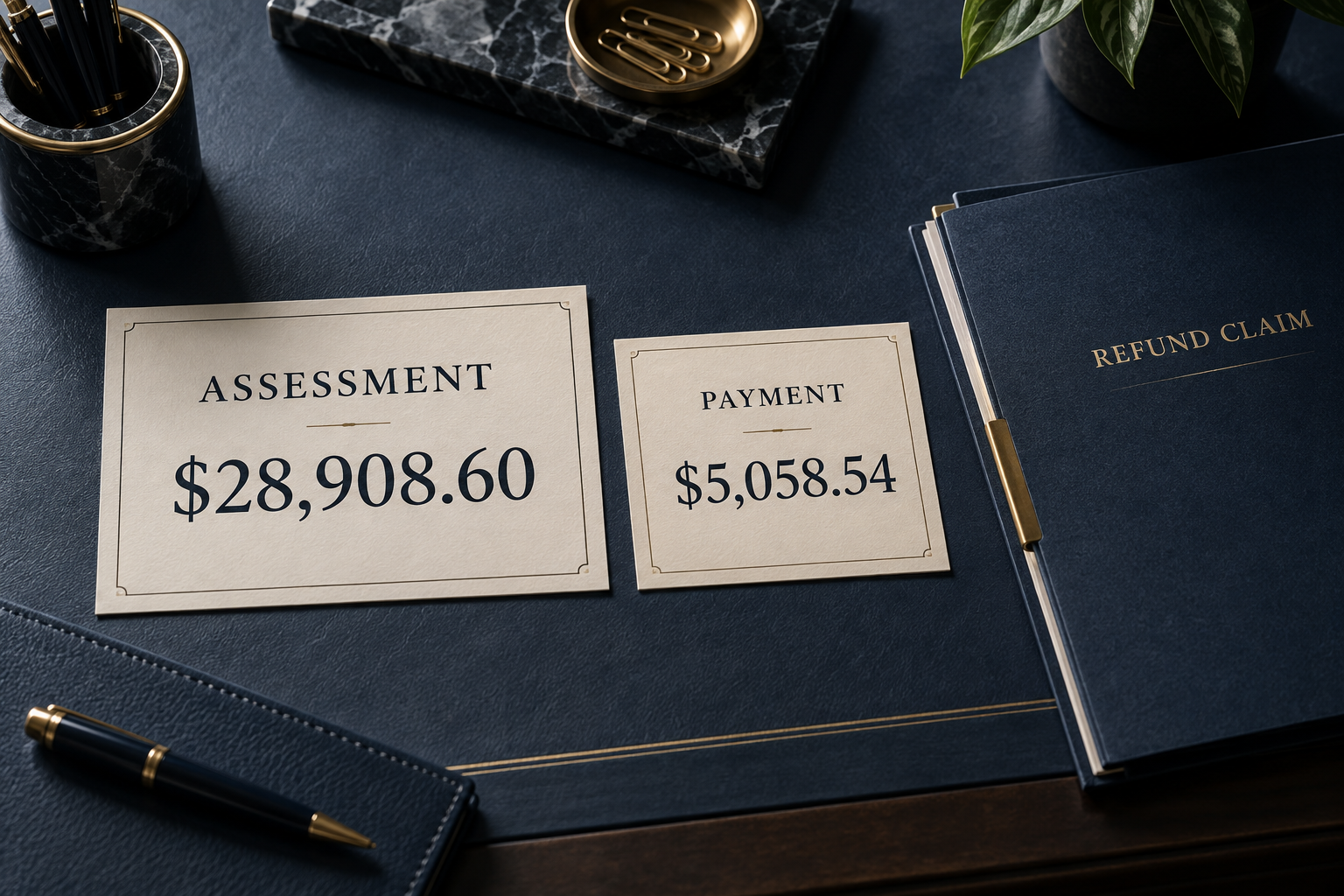
The dispute concerned whether losses reported for 1950 were ordinary or capital. The Commissioner assessed $28,908.60, including interest. Flora paid $5,058.54, filed an administrative refund claim, and sued after disallowance. The government argued that the partial payment was insufficient to establish district-court jurisdiction. See the official U.S. Reports decision at 147.
The Supreme Court had addressed the issue in 1958, then granted rehearing and reconsidered the statutory arguments. The 1960 opinion is the operative rehearing decision analyzed here. Its extended treatment reflects disagreement over how Congress divided prepayment and postpayment review, not a holding on the taxpayer’s substantive loss deduction.
The statutory language was read as part of a larger system
Section 1346(a)(1) grants district-court jurisdiction over specified tax-recovery actions. Flora argued for a reading that allowed suit for the amount actually paid even though the rest remained outstanding. The Court found full payment the better construction when the language was considered with legislative history and the related tax statutes. See Flora, 362 U.S. at 148–63.
“full payment of the assessment is a jurisdictional prerequisite to suit”
Flora, 362 U.S. at 146.
The quoted language appears at 146 as the Court describes the rule it reaffirmed. The opinion treated the provision as a component of a coordinated tax-review structure, rather than an isolated authorization to litigate any small payment toward an indivisible annual income-tax assessment.
The Tax Court alternative helped explain the design
The Court examined Congress’s creation of the Board of Tax Appeals, later the Tax Court, as a forum in which a deficiency could be contested without first paying it. It reasoned that allowing partial-payment district-court suits would disrupt the distinction and create procedural difficulties Congress had addressed elsewhere. The majority also considered concerns about hardship but concluded that the statutory arrangement required the full-payment rule. See id. at 158–67, 175–77.
That reasoning does not assure that every taxpayer always has an open Tax Court remedy. The appropriate notice, jurisdictional basis, and timing remain necessary. A taxpayer who has missed the relevant prepayment procedure cannot assume the Court’s description supplies a new filing opportunity.
What the decision does not decide
The opinion concerns the income-tax assessment before it. It discusses the distinct setting of divisible taxes; the rule should not be generalized to every tax, penalty, or transactional assessment without examining controlling authority. Nor does full payment eliminate the separate administrative refund-claim requirement under 26 U.S.C. § 7422(a).
Administrative claim timing and the recoverable-payment lookback under § 6511, followed by the refund-suit timing in § 6532(a), are additional inquiries. Flora establishes a payment-related jurisdictional threshold; it is not a complete procedural checklist and does not toll any of those periods.
Practical implications for taxpayers choosing a forum
A review should begin with the assessment, tax type, account transcript, payment allocations, refund claim, and disallowance. Distinguish a deposit from an actual tax payment and confirm the relevant liability period. Our refund-forum guide organizes those records and procedural questions.
The California and federal forum comparison addresses a different jurisdictional distinction, while the tax practice page provides representation context. MCX Legal can assess the available route from the actual notice and payment history. Flora’s central lesson is that a potentially sound tax argument still needs a court with authority to hear it.
Questions readers ask
Did Flora decide whether the taxpayer’s losses were deductible as ordinary losses?
No. The decision resolved the district-court jurisdiction issue created by partial payment.
Does paying in full guarantee a valid refund lawsuit?
No. The administrative claim, timing, and other jurisdictional requirements remain separate.
Check refund jurisdiction before litigating the tax merits
Mission X Trial Lawyers can review the records and legal issues described here. Call (888) 611-4683 or email office@mcxlegal.com.